
CUPPING & GUA SHA SCRAPING
Cupping and Gua Sha are traditional therapeutic techniques used to improve circulation, release myofascial tension, and accelerate the body's natural healing response, making them effective tools for managing chronic pain and athletic recovery.
CUPPING
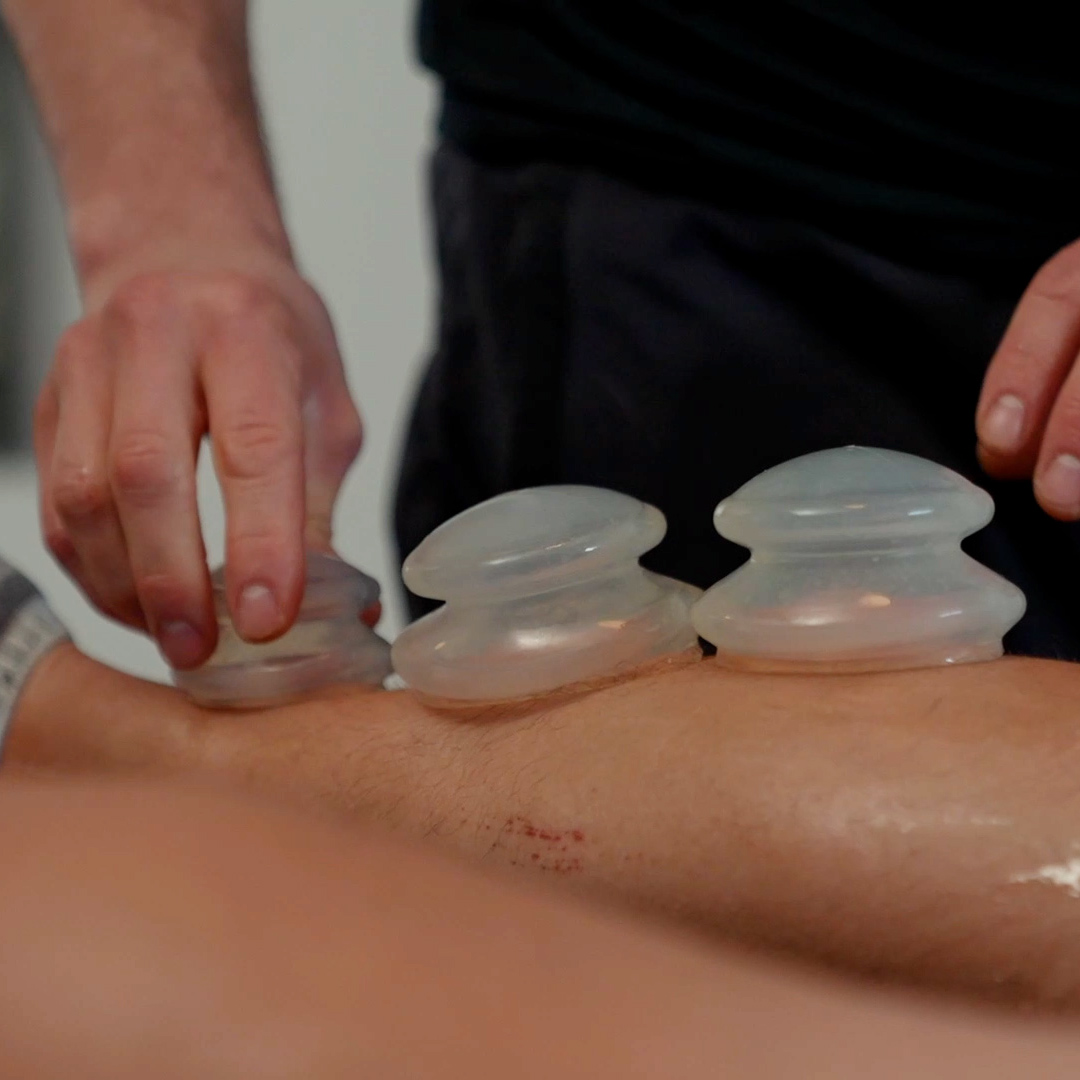
Cupping involves placing specialized cups (glass, silicone, or plastic) on the skin to create a vacuum. While most manual therapies use compression (pushing into the tissue), cupping uses negative pressure to pull the skin, fascia, and superficial muscle layers upward.
Static Cupping: Cups are left in place for 5–15 minutes to target specific trigger points.
Dynamic (Sliding) Cupping: Oil is applied, and the cups are moved across the muscle fibers to provide a deep-tissue massage effect and promote myofascial release.
GUA SHA SCRAPING
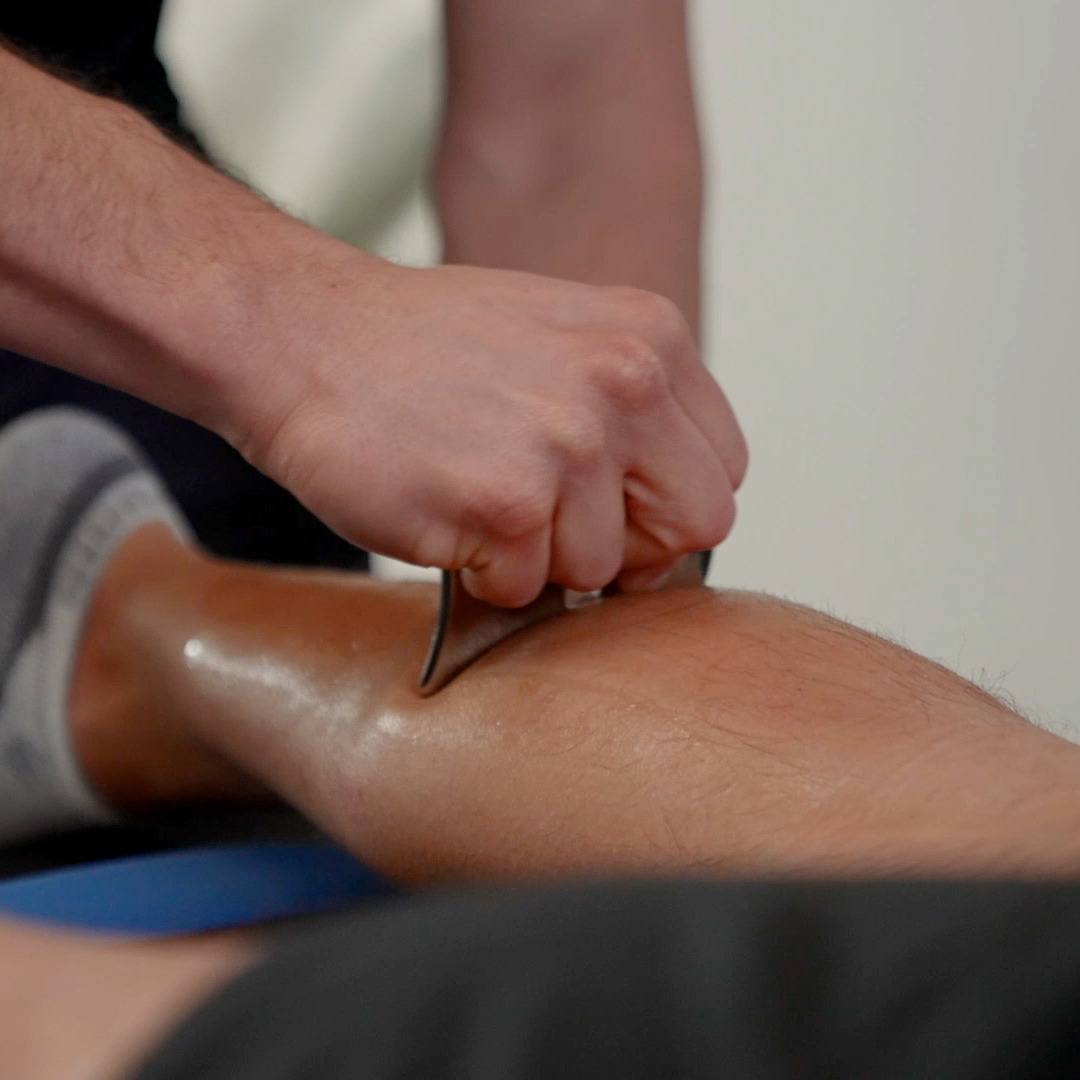
Gua Sha involves using a smooth-edged tool—often made of jade, bone, or stainless steel—to gently "scrape" or stroke the skin. In a clinical pain management setting, this is often referred to as Instrument Assisted Soft Tissue Mobilization (IASTM). It is primarily used to break up adhesions (scar tissue) and "stagnation" in the connective tissue to promote healthy circulation and connective tissue alignment for reduced aches/pains and improved mobility or performance.
BENEFITS
These treatments offer several physiological benefits that assist in the recovery and maintenance of high-performance bodies:
Improved Microcirculation: Both techniques create a localized inflammatory response (often resulting in temporary "petechiae" or redness). This signals the body to increase blood flow to the area, delivering fresh oxygen and nutrients while flushing out metabolic waste.
Fascial Decompression: Cupping is uniquely effective at lifting the fascia away from the muscle. This creates space for fluid movement and reduces the "stuck" feeling often associated with chronic tightness or overuse.
Nervous System Regulation: The mechanical stimulation of these tools can help down-regulate a "high-alert" nervous system, moving the client from a sympathetic (fight-or-flight) state into a parasympathetic (rest-and-digest) state, which is essential for pain modulation.
Increased Range of Motion: By breaking down adhesions and reducing muscle hypertonicity, these services help restore functional movement patterns and flexibility.
Reduced Inflammation: Although they create a controlled "micro-trauma," the ultimate result is a reduction in chronic systemic inflammation by stimulating the lymphatic system.
COMPANY
COACHING
PAIN MANAGEMENT
RECOVERY
LEGAL


© Copyright 2026. SSPT Fitness & Wellness / MACROS. 861 Warwick Street, Woodstock Ontario N4S4R6. All Rights Reserved.