
RED LIGHT THERAPY
Book your Red Light Therapy session.
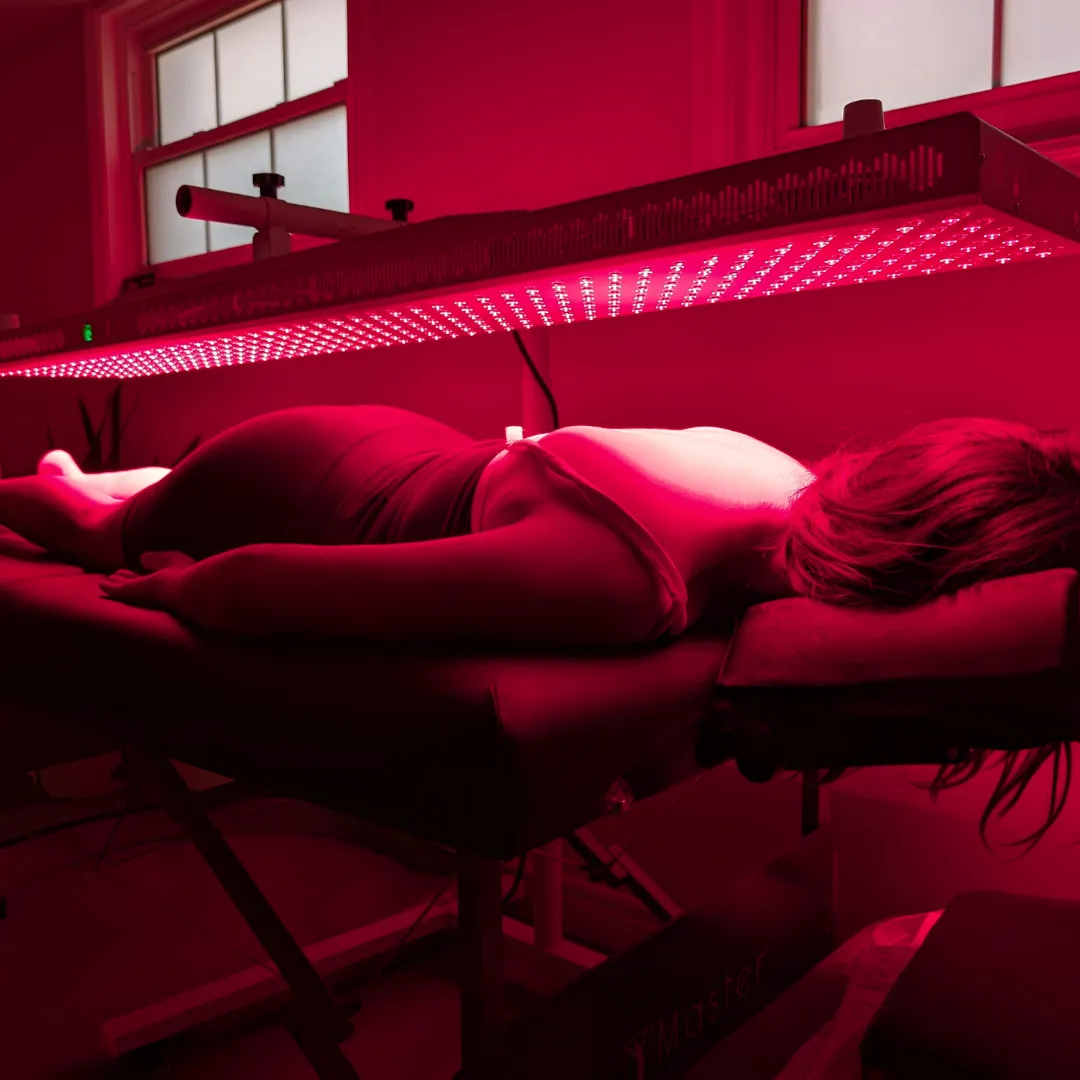
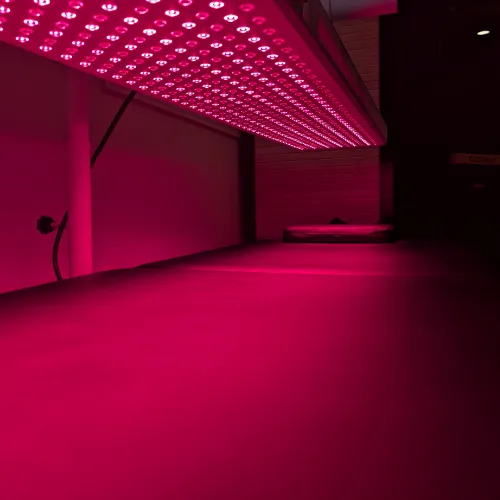
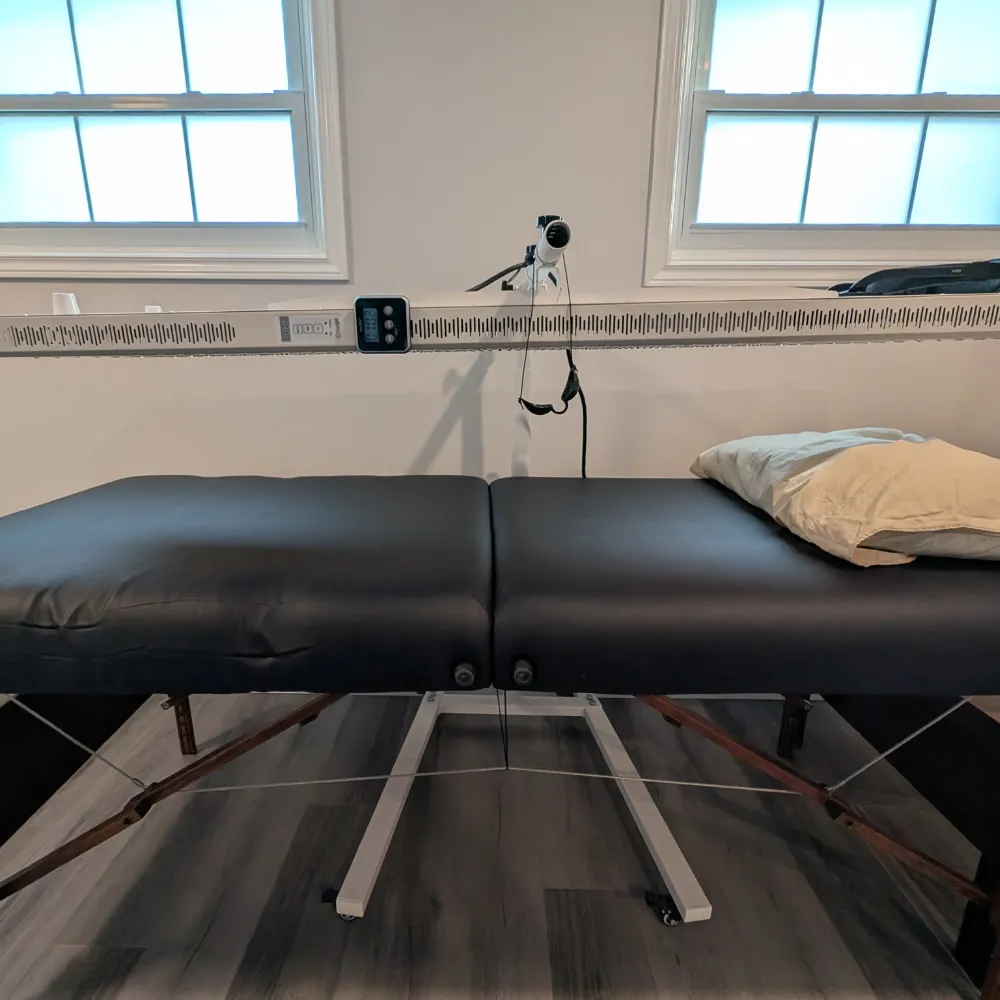
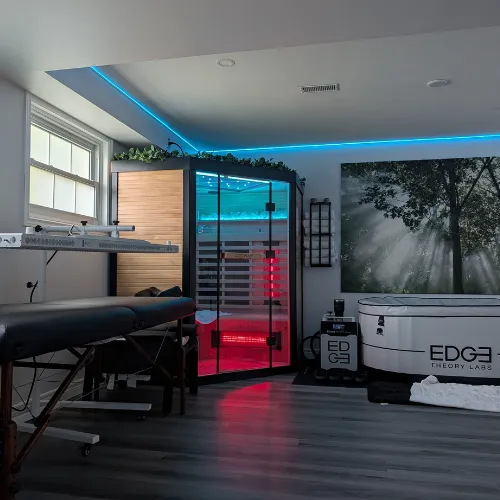
RED / NEAR INFRARED LIGHT PANEL
Red Light Therapy (RLT) and Near-Infrared (NIR) light utilize specific wavelengths to stimulate cellular energy production, primarily through the mitochondria. This process, known as photobiomodulation, offers a wide range of benefits including accelerated muscle recovery, reduced inflammation, enhanced skin health, and improved joint function.
Red Light and Near-Infrared (NIR) light are part of the electromagnetic spectrum. While they are often used together, they penetrate the body at different depths and serve slightly different primary functions:
Red Light (approx. 630–660 nm): Primarily absorbed by the skin’s surface. It is ideal for wound healing, collagen production, and skin rejuvenation.
Near-Infrared Light (approx. 810–850 nm): Penetrates deeper into the body, reaching muscles, nerves, and even bone. This makes it more effective for deep-tissue recovery and systemic inflammation.
Enhanced Muscle Recovery and Performance
For athletes and high-performers, this is often the primary draw. The light helps increase the production of Adenosine Triphosphate (ATP), the "energy currency" of cells.
Reduced Soreness: Decreases Delayed Onset Muscle Soreness (DOMS) after intense training.
Faster Repair: Stimulates the repair of micro-tears in muscle fibers.
Increased Endurance: Using the panel prior to activity may improve muscular endurance by priming the mitochondria.
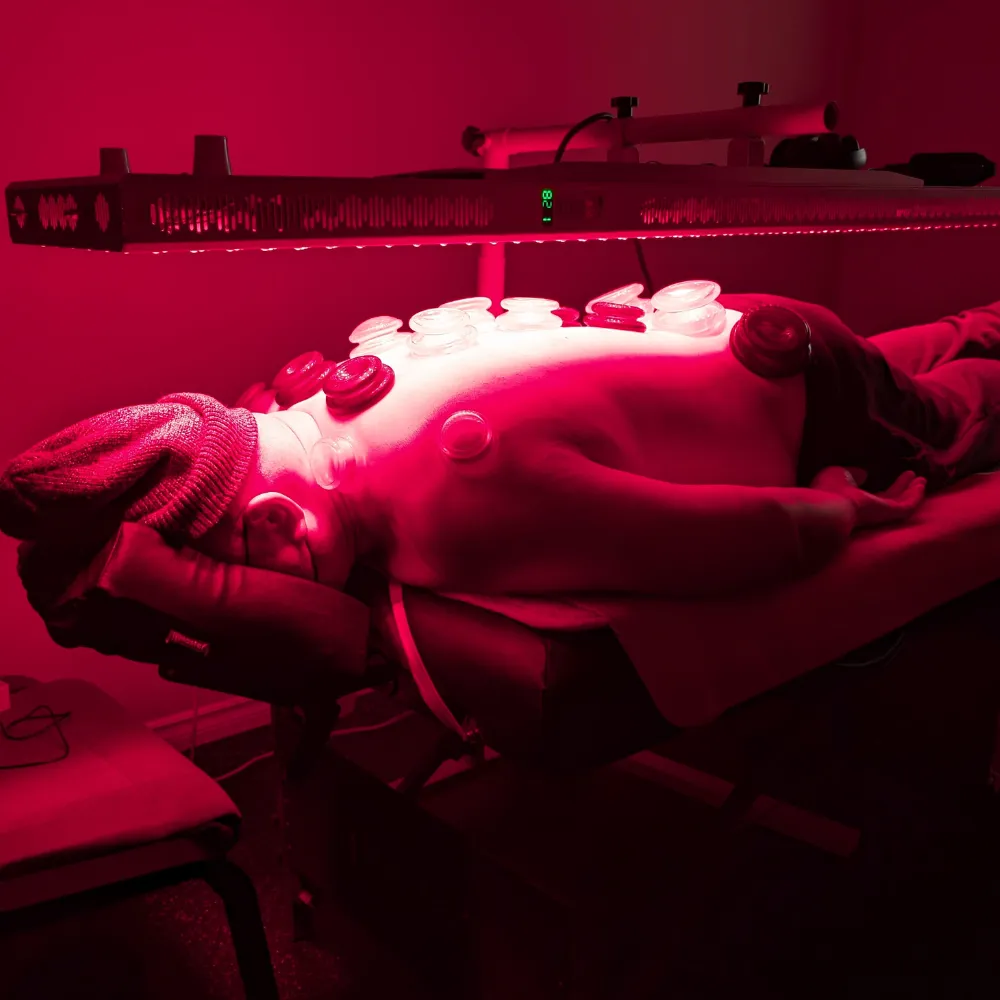
Pain Management and Joint Health
RLT is a non-invasive way to manage chronic and acute pain.
Anti-Inflammatory: Reduces the presence of inflammatory cytokines in the body.
Joint Lubrication: Can help alleviate stiffness in conditions like arthritis or general joint wear-and-tear.
Injury Rehabilitation: Accelerates the healing process for ligament and tendon issues.
Skin Rejuvenation and Health
Red light is widely used in the aesthetic industry for its ability to naturally boost "youth" markers in the skin.
Collagen Production: Increases fibroblast activity, which creates collagen and elastin to reduce fine lines and wrinkles.
Acne and Scarring: Reduces inflammation associated with acne and can help fade the appearance of surgical or injury-related scars.
Circulation: Improves blood flow to the skin, creating a healthier "glow."
Sleep and Circadian Rhythm Support
In an age of "blue light" (from phones and screens), red light serves as a corrective tool.
Melatonin Regulation: Red light does not suppress melatonin like blue or white light does, making it an excellent evening tool to help the body transition into sleep.
Mood Elevation: Many users report improvements in mood and energy levels, particularly during winter months or in low-sunlight environments.
COMPANY
COACHING
PAIN MANAGEMENT
RECOVERY
LEGAL


© Copyright 2026. SSPT Fitness & Wellness / MACROS. 861 Warwick Street, Woodstock Ontario N4S4R6. All Rights Reserved.